About
About CCTI.
The Centre for Cryptographic Trust Infrastructure is a research centre at the University of Cambridge Department of Computer Science and Technology, in collaboration with SINE Foundation, Ink & Switch and Light Squares. It is funded by ARIA as part of the Scaling Trust programme.
01 / Mission
Enabling cooperative AI by proving facts about the physical world.
We hypothesise that AI agents able to verify each other's claims come to an agreement where humans or AI without such a trust infrastructure would not. To test this, we work on two challenges.
A
Proving facts about the physical world.
We develop infrastructure for verifying claims about the physical world without trusted intermediaries and without disclosing confidential data: attestation mechanisms that bind data to its sources, and non-disclosing proofs that compose these attestations into evidence.
B
Enabling cooperative AI.
We explore how this infrastructure enables cooperation among AI agents, and develop mechanisms for agents to assess evidence, negotiate claim acceptance terms and prove their reasoning without intermediaries.
02 / Structure
From cryptographic protocols to agentic coordination.
Manufacturing, logistics, and more.
Select use cases, build demonstrators, and test our hypothesis.
Evaluation · Demonstrator and AI advantage
Build trust, enable cooperation.
Negotiate evidence needs and match agents.
B · Enabling cooperative AI
Provide derived statements over confidential data.
Encode domain rules, e.g. ISO 14083 emissions accounting.
A · Proving facts about the physical world
Bind claims about the physical world to trust anchors.
Attest third-party data, e.g. from bank websites.
A · Proving facts about the physical world
TEEs, zk-SNARKs, MPC, zkVMs
03 / Scaling Trust
Integrating across the Scaling Trust programme.
CCTI is part of ARIA's Scaling Trust programme, which brings together teams working on the tools, foundations and testbeds that allow AI agents to act securely on our behalf. Besides conducting our own research, we serve as the programme's cyber-physical integration partner. In this role, we collaborate with other teams in the programme and integrate their work where appropriate.
Track 1Arena
evidenceEnvironment & challenge design
- Andon Labs
Physical build & operations
- Amodo Design
Security & red teaming
- BT6
Community partners
Industry partners
Track 2Cyber-physical agent stack
implementationDigital partners
Open-source practice, use cases
Digital stack
Agents · agentic loop
- Agentic Security ReasonerUniversity of Edinburgh
- DovetailInstitute for Decentralized AI
Tools · TEE sandbox, auditing
- ProtoSage · ProtoBenchRDI Foundation
Agents · new models
Agents · negotiation
- Project HAMMERMultiscalar Intelligence
Integration
Glues the stack together
- CCTIUniversity of Cambridge / SINE Foundation
Physical stack
Physical verification · bridges, sensors, actuators
- Physical WatermarkingUniversity of Cambridge
Physical environments · evals, benchmarks, harness
Cyber-physical partners
Real-world data and environments
- Manufacturing GroundingMatta
Track 3Fundamental theory
theoryTheory of secure agent interaction
Generative security
- AI-Native Proof SystemsEPFL
Formal AI security
- Advanced Cryptography for AIUniversity of Cambridge
Secure agent interaction
Cyber-physical bridges
Physical verification theory
Secure hardware
Nature cryptography
Physical environments · evals, world models
04 / Team
The people.

 Martin PompéryCo-PI · SINE Foundation
Computer scientist with a strong interest in economics and sustainability; co-founder of SINE Foundation; author of globally adopted protocols for carbon transparency.
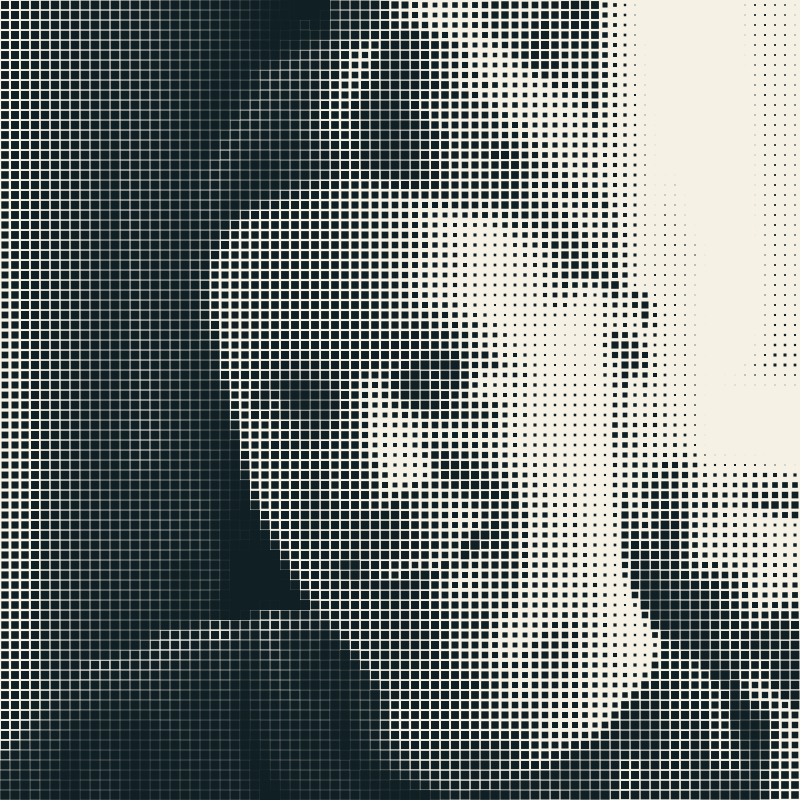
 Martin KleppmannDirector · Co-PI · University of Cambridge
Martin Kleppmann is an Associate Professor at the University of Cambridge, working on decentralised systems, local-first collaboration software, and cryptographic protocols. Previously he was a software engineer and entrepreneur, cofounding and selling two startups and developing data infrastructure at LinkedIn. His book Designing Data-Intensive Applications is the standard text on large-scale data systems.

 Mario LinsLight Squares
Mario Lins is co-founder of Light Squares, where he works on software supply chain security, helping organisations know what their software is made of. His PhD at JKU Linz focused on transparency and verifiability of software supply chains, in particular on reducing the need to blindly rely on trust anchors. He was also a visiting researcher at the University of Cambridge.

 Lars MalmqvistSINE Foundation
Lars Malmqvist is a research engineer at SINE Foundation, working on AI evaluation and safety. At CCTI, he designs the evaluations that measure what AI agents gain from the trust infrastructure. He holds a PhD in computer science from the University of York, where he worked on computational argumentation and graph neural networks, and an MBA from the University of Cambridge. Previously, he co-founded the GovTech company Arcus Global and served as its CTO.

 Jonathan HeissSINE Foundation
Jonathan Heiss is a senior research engineer at SINE Foundation. His research focuses on building trustworthy systems, combining methods from distributed systems, applied cryptography, and software engineering. Previously, he was a postdoc at TU Berlin and a visiting researcher at the University of Cambridge.

 Jessica ManUniversity of Cambridge
Jessica Man is a PhD student at the University of Cambridge. Her research applies cryptography to sustainability reporting, to ensure that data from untrusted sources is accurate whilst protecting commercially sensitive information. Before coming to Cambridge, she worked for over 20 years as a tech lead and software engineer in the technology and banking sectors.

 Hossein HafeziUniversity of Cambridge
Hossein Hafezi is a PhD student at the University of Cambridge, previously at NYU, working on proof systems and their applications to real-world problems.

 grjteInk & Switch
Cryptography research engineer with a focus on ZK proof systems.

 Daniel HugenrothLight Squares
Daniel Hugenroth is co-founder of Light Squares, where he works on making software supply chains more secure and verifiable. His background is in applied cryptography, trusted execution environments (TEEs), and protocol design. Daniel is also an Assistant Research Professor at the University of Cambridge.

 Aurel StenzelSINE Foundation
Aurel Stenzel is a mathematician and economist by training, with a PhD. His research focuses on information asymmetries and applied game theory. He is a co-founder of SINE Foundation.

 Alireza KavousiUniversity of Cambridge
Alireza Kavousi is a postdoctoral researcher in cryptography and decentralised systems at the University of Cambridge. He holds a PhD from UCL.

 Ágnes KissSINE Foundation
Ágnes Kiss is a senior cryptography researcher at SINE Foundation, focusing mainly on privacy-preserving technologies and their applications in real-world use cases. She contributes to researching and implementing privacy-critical aspects of the infrastructure. Previously, she was a postdoc at the CISPA Helmholtz Center for Information Security in Saarbrücken and a PhD researcher at TU Darmstadt.
Visiting researchers

 Arman KolozyanUniversity of Cambridge
Arman Kolozyan is a predoctoral researcher specialising in applied cryptography and AI security. He has held research positions at COSIC (KU Leuven), Nokia Bell Labs, the Max Planck Institute for Security and Privacy (MPI-SP), and CISPA, with projects ranging from analysing the security of existing systems to building new secure ones. As a visiting researcher at the University of Cambridge, he works on using cryptography to establish trust between AI agents.
We welcome visiting researchers who want to work with us on cryptographic trust for AI agents. Write to contact@ccti.ai.
05 / Partners
Partner institutions.
Department of Computer Science and Technology. Lead institution.
Expertise in applied cryptography, game theory, and collective action problems.
Expertise in applied cryptography, local-first software, and rapid prototyping.
Expertise in TEEs and cryptographic protocol engineering.
06 / Contact
Contact details.
- Email: contact@ccti.ai
- Address: Department of Computer Science and Technology, University of Cambridge, William Gates Building, 15 JJ Thomson Avenue, Cambridge CB3 0FD, UK
- LinkedIn: https://www.linkedin.com/company/c-f-c-t-i/ (opens in a new tab)